MATERIAL HANDLING
Bucket Control & Material Movement
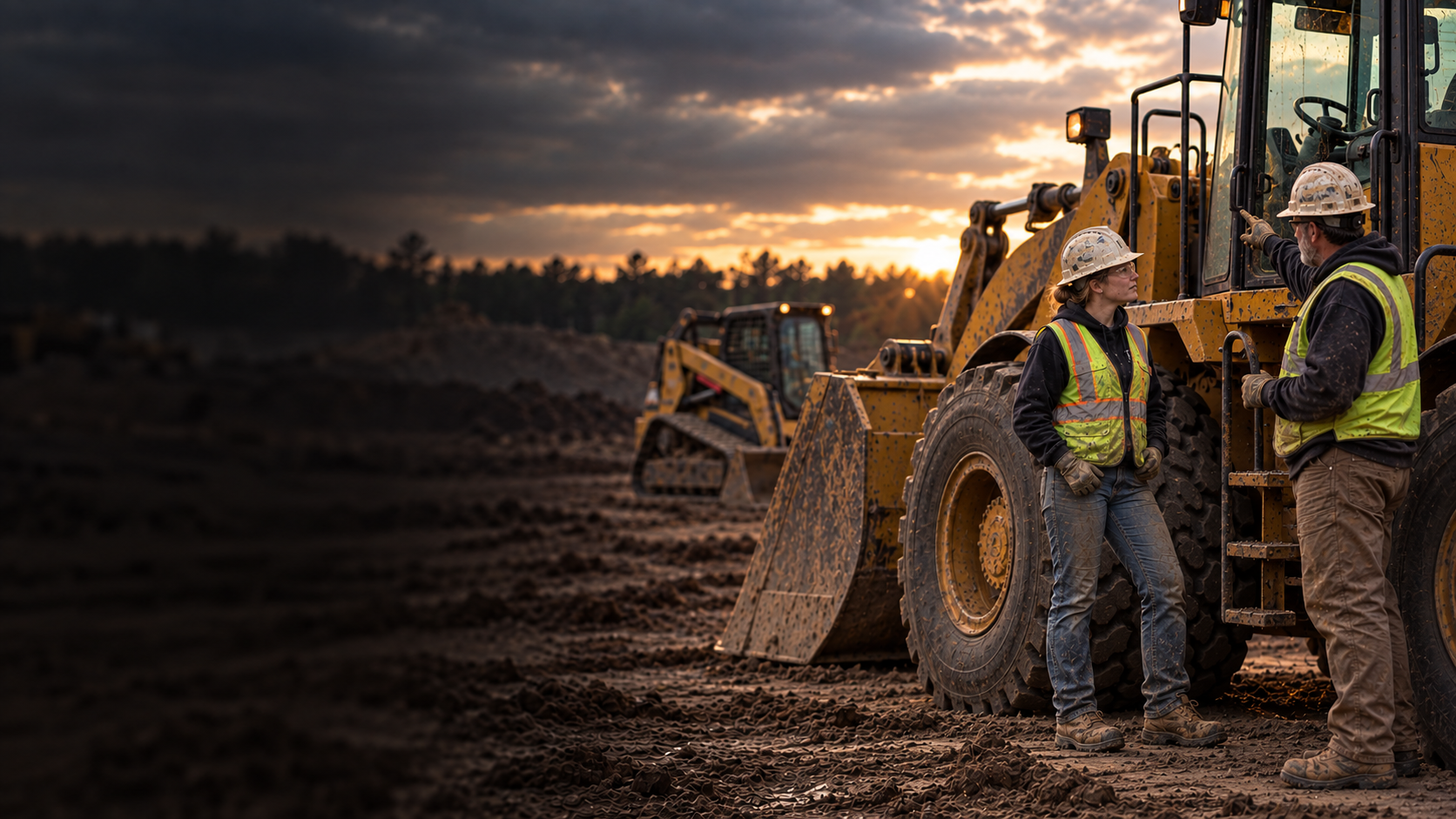
Develop smooth bucket control while loading, carrying, dumping and spreading material with both the front-end loader and skid steer.

Train on both a front-end loader and skid steer while building practical skills in material handling, truck loading, stockpile management, bucket control, grading and safe operation. Students train on real equipment—not simulators.
MATERIAL HANDLING & MACHINE CONTROL
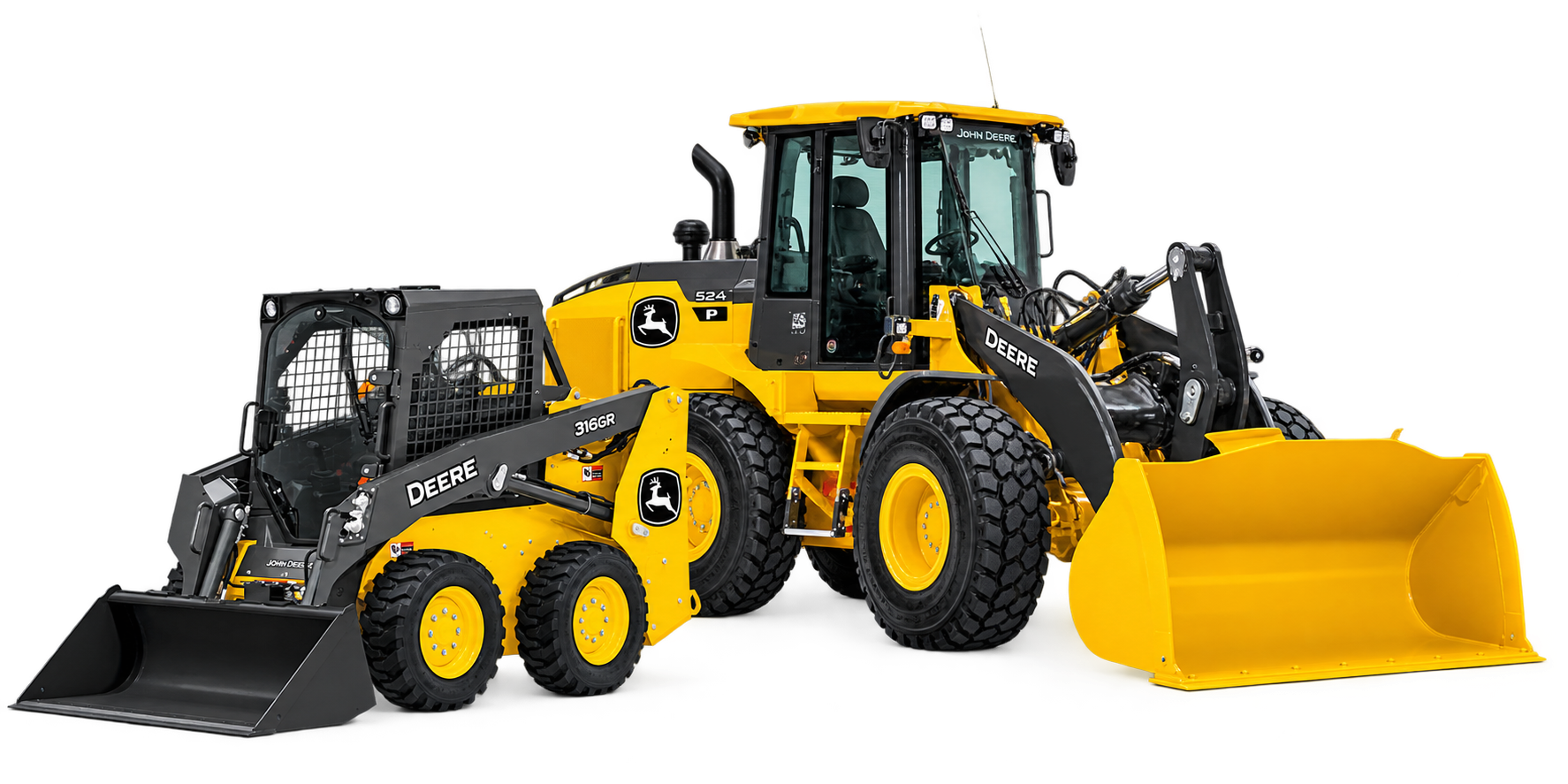
Build practical operating skills on both a front-end loader and skid steer through hands-on training with real equipment. Students develop machine control, material handling, truck loading, stockpile management, grading and safe jobsite operating skills.
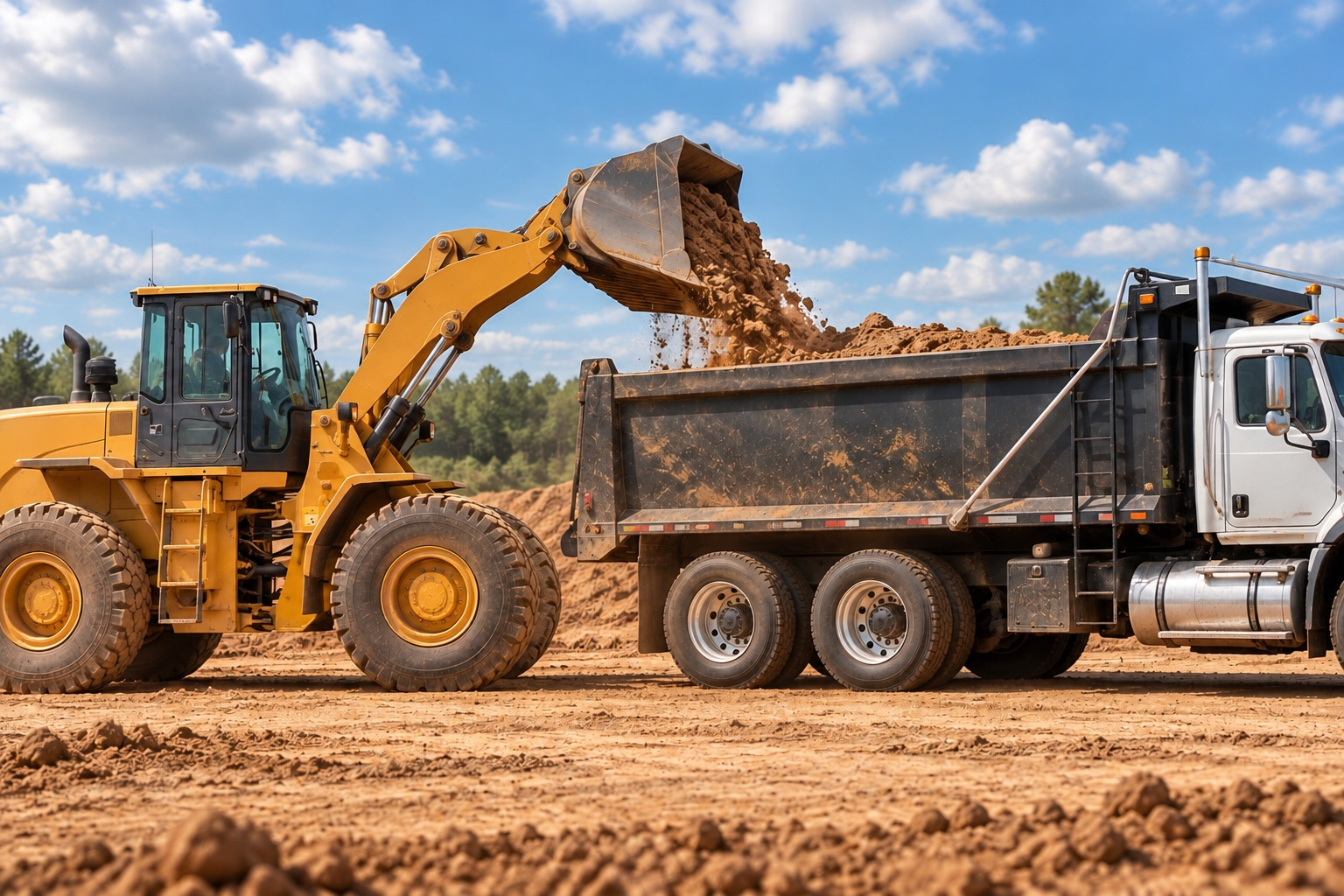
Students train on both a front-end loader and skid steer, building practical operating skills on real equipment—not simulators.
BUILT FOR THE JOBSITE
A skilled operator does more than move material. Training develops the control, judgment and jobsite awareness needed to load trucks, manage stockpiles, handle material, use attachments and operate safely and efficiently on both a front-end loader and skid steer.
Develop smooth bucket control while loading, carrying, dumping and spreading material with both the front-end loader and skid steer.
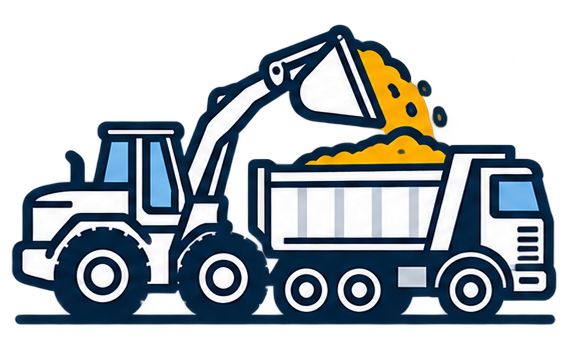
Learn proper machine positioning, bucket placement and loading techniques while developing the control needed to load trucks safely and efficiently.

Practice building, maintaining and reclaiming material stockpiles while learning efficient approaches, bucket positioning and work-area organization.
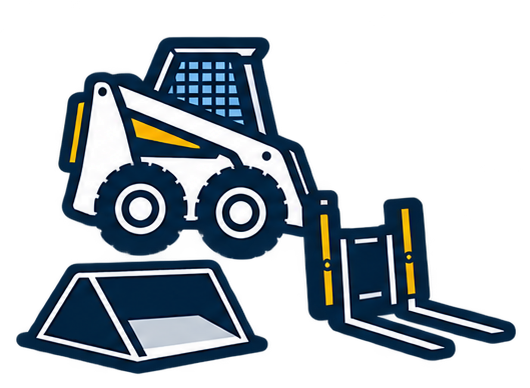
Learn safe attachment changes and gain experience using common loader and skid steer attachments for different jobsite tasks.
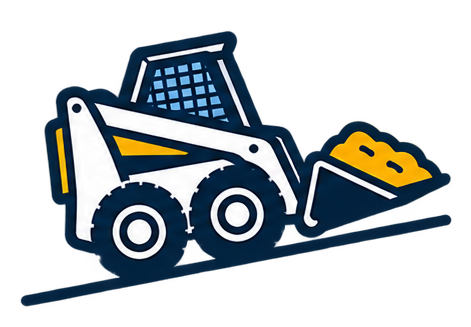
Learn proper travel height, visibility, machine positioning, center of gravity and safe operating practices while carrying material and working on uneven ground.
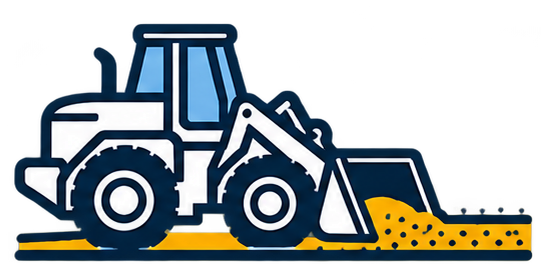
Use the loader and skid steer to spread material, smooth working surfaces, perform basic grading and leave work areas clean and organized.
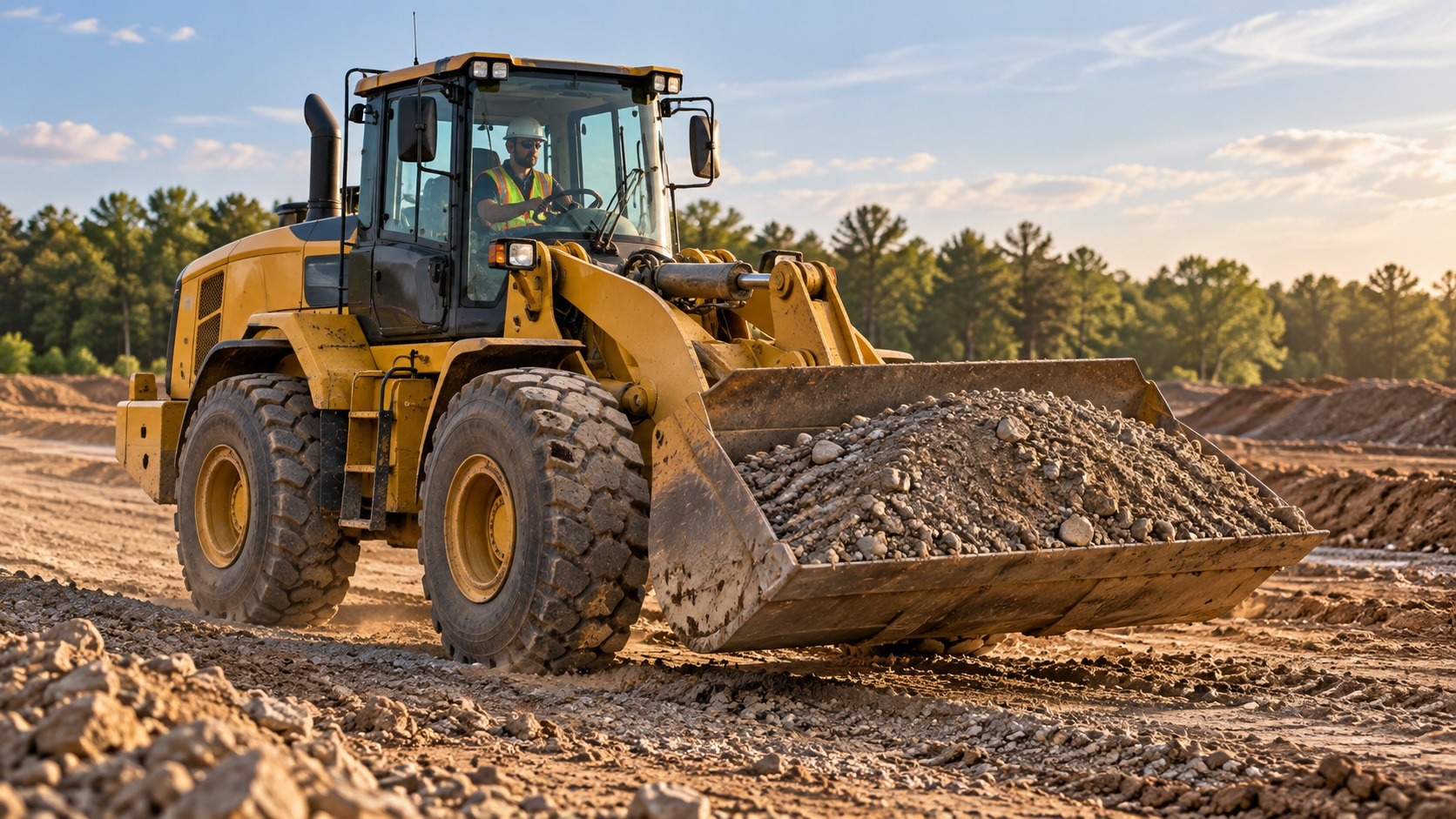
Moving material safely takes more than filling the bucket. Students learn how load position, travel height, machine balance and terrain affect stability, visibility, and control while carrying and placing material
MORE THAN A BUCKET.
Different attachments turn loaders and skid steers into completely different tools. Students gain experience changing and operating attachments while learning how attachment choice affects machine control, material handling and the work that can be performed.
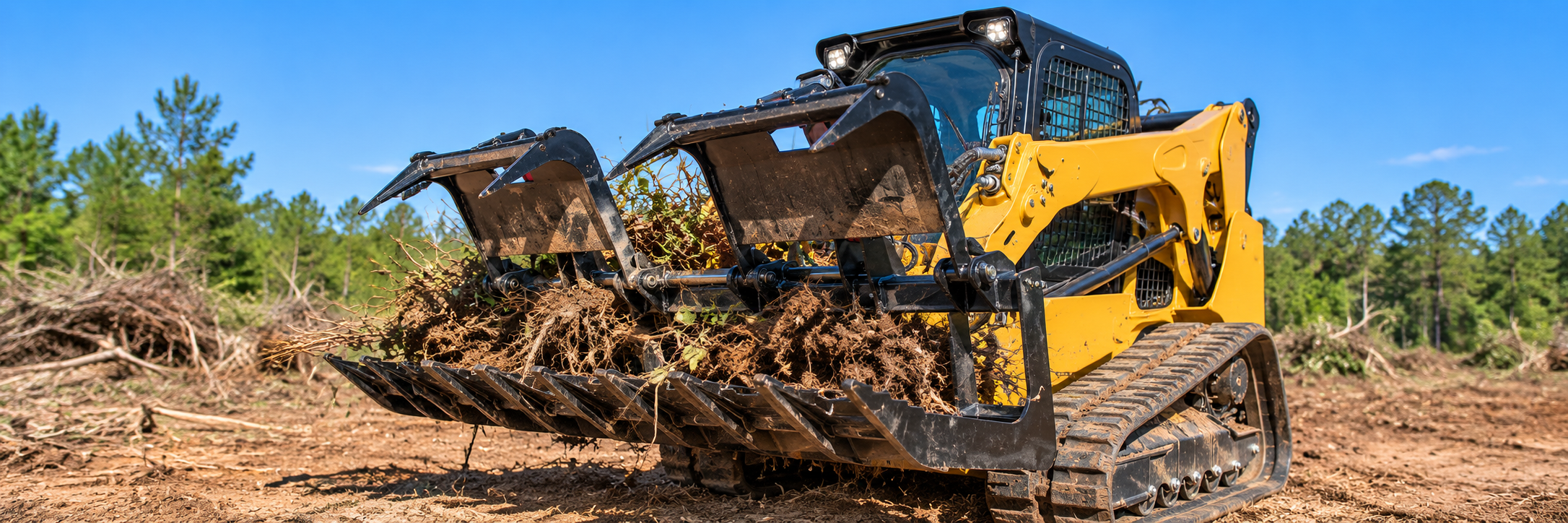
Train with standard buckets for loading, carrying and spreading material, then use the grapple bucket to control brush, debris and irregular materials.
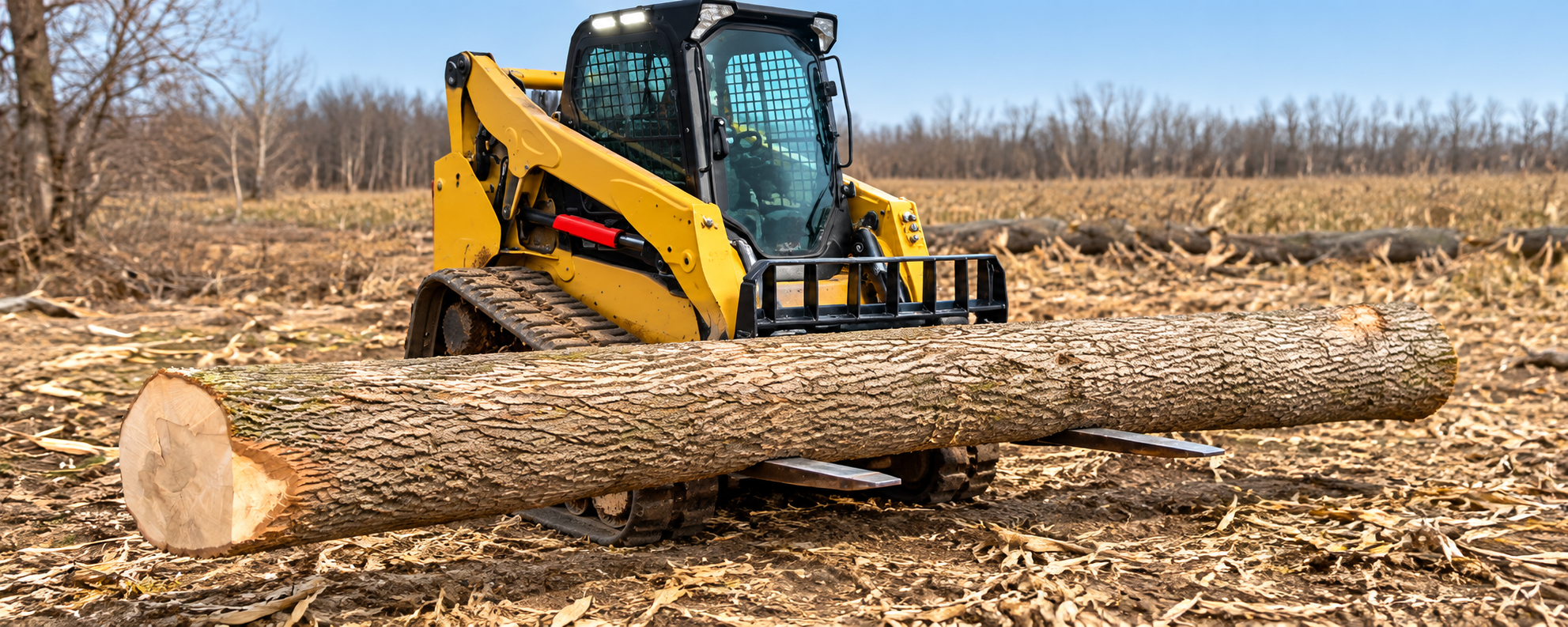
Learn to use forks for logs, bulky materials and loads that are better lifted and carried than handled with a bucket.
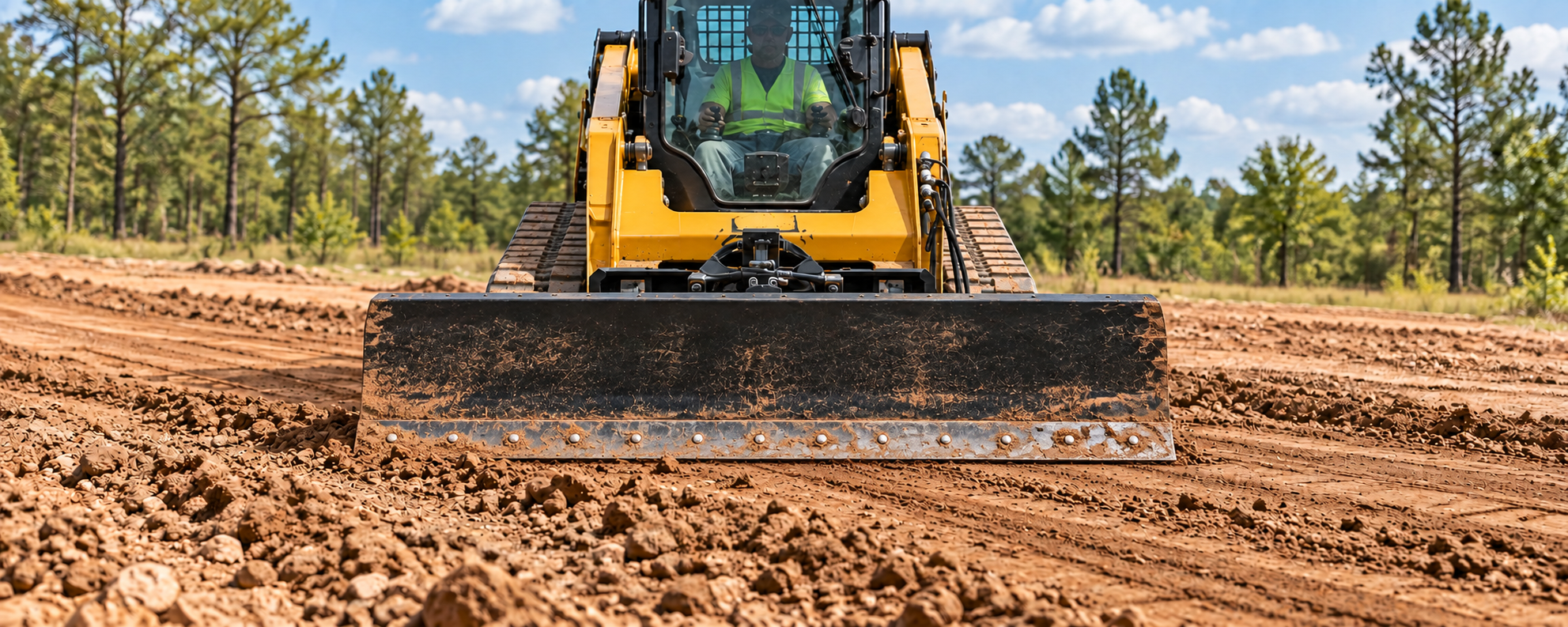
Use specialized skid steer attachments for grading, clearing and land work while learning how different attachments affect machine positioning, control and application.
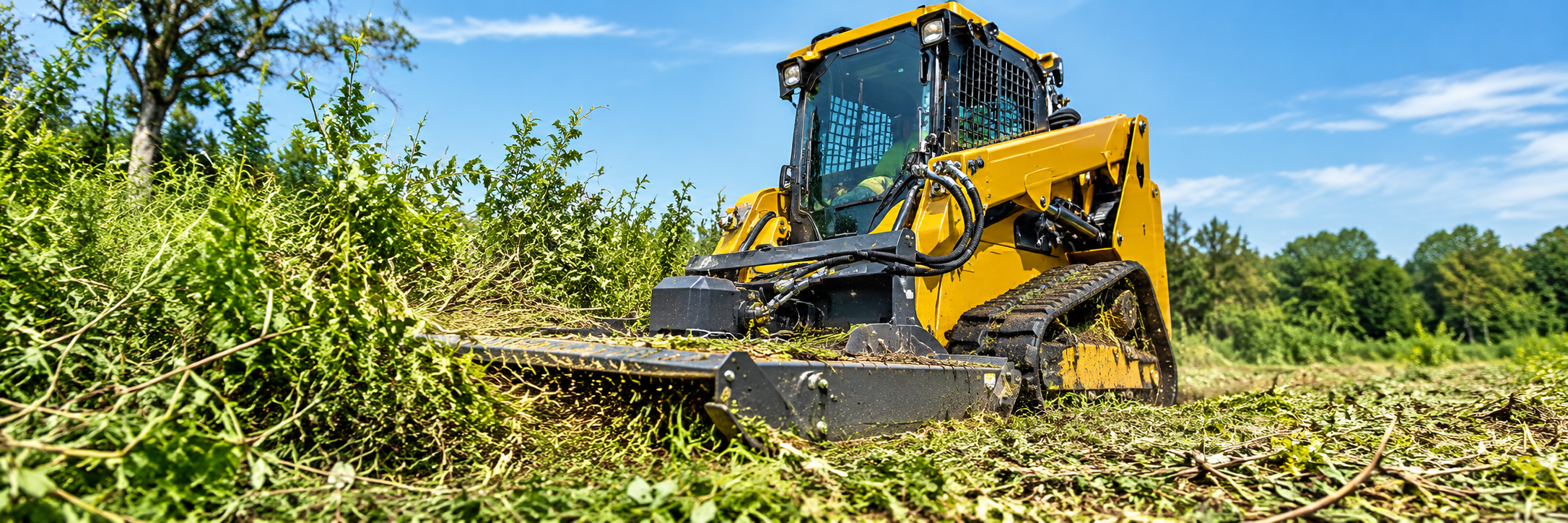
Gain experience using the skid steer as a powered attachment platform for cutting and clearing vegetation in appropriate work areas.
LOAD AWARENESS & MACHINE STABILITY
Operating safely with a load requires understanding more than bucket position. Students learn how added weight changes a machine's center of gravity, stability, steering and stopping characteristics.
Training covers the principles behind rated operating capacity, load charts and the stability triangle so students understand why load position, attachment choice, terrain and travel height matter.
Students apply these concepts while operating both the front-end loader and skid steer, learning to recognize when a load or machine position can reduce stability.
Certification Earned in the Dirt
Students earn certification by demonstrating safe, accurate and productive operation on real equipment—not simply by passing a written test. Evaluation begins on day one and continues as students build control, judgment and efficiency on both the front-end loader and skid steer.

Pre-operation inspections, start-up and shutdown, seatbelt use, safe travel and backing, surroundings, attachment checks and proper machine positioning.
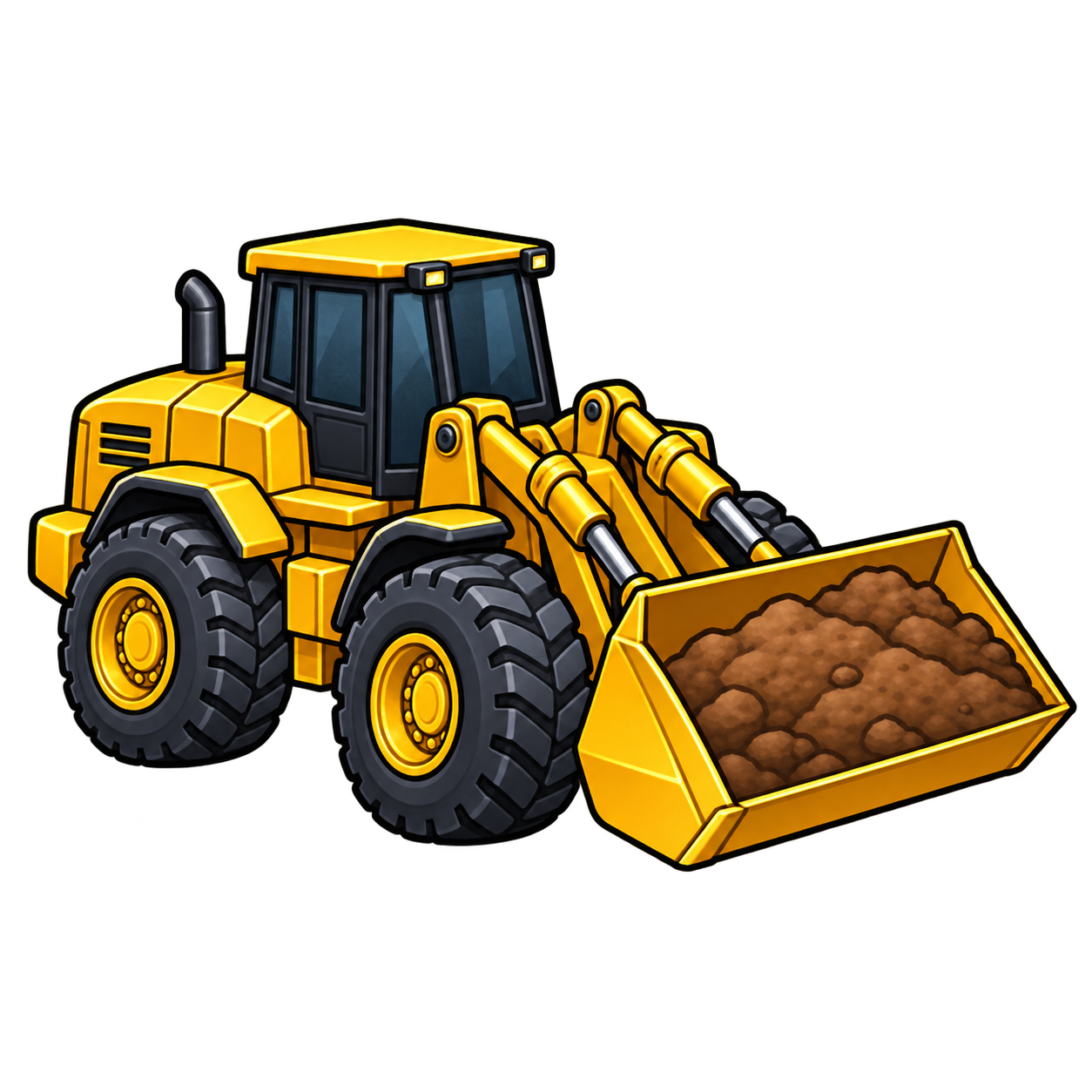
Smooth bucket and attachment control, loading, carrying, dumping, spreading, material placement and maintaining stability and control with a loaded machine.

Truck loading, stockpile work, grading, material movement, attachment operation, clearing, work-area planning and improving cycle efficiency.
The goal is to help students work toward approximately 80% of an experienced professional operator’s production level while maintaining safety and acceptable work quality. Students receive repeated opportunities to improve speed, accuracy and decision-making.

TWO MACHINES. TWO CERTIFICATIONS.
Students train on both front-end loaders and skid steers, developing the control, material-handling skills and jobsite awareness required to operate each machine safely and productively.
FRONT-END LOADER
Build skill operating a full-size loader for production material handling, stockpile work, truck loading and site operations.
SKID STEER
Develop precise machine control while learning to use a skid steer as a versatile platform for loading, grading, clearing and attachment work.
Think Like an Operator
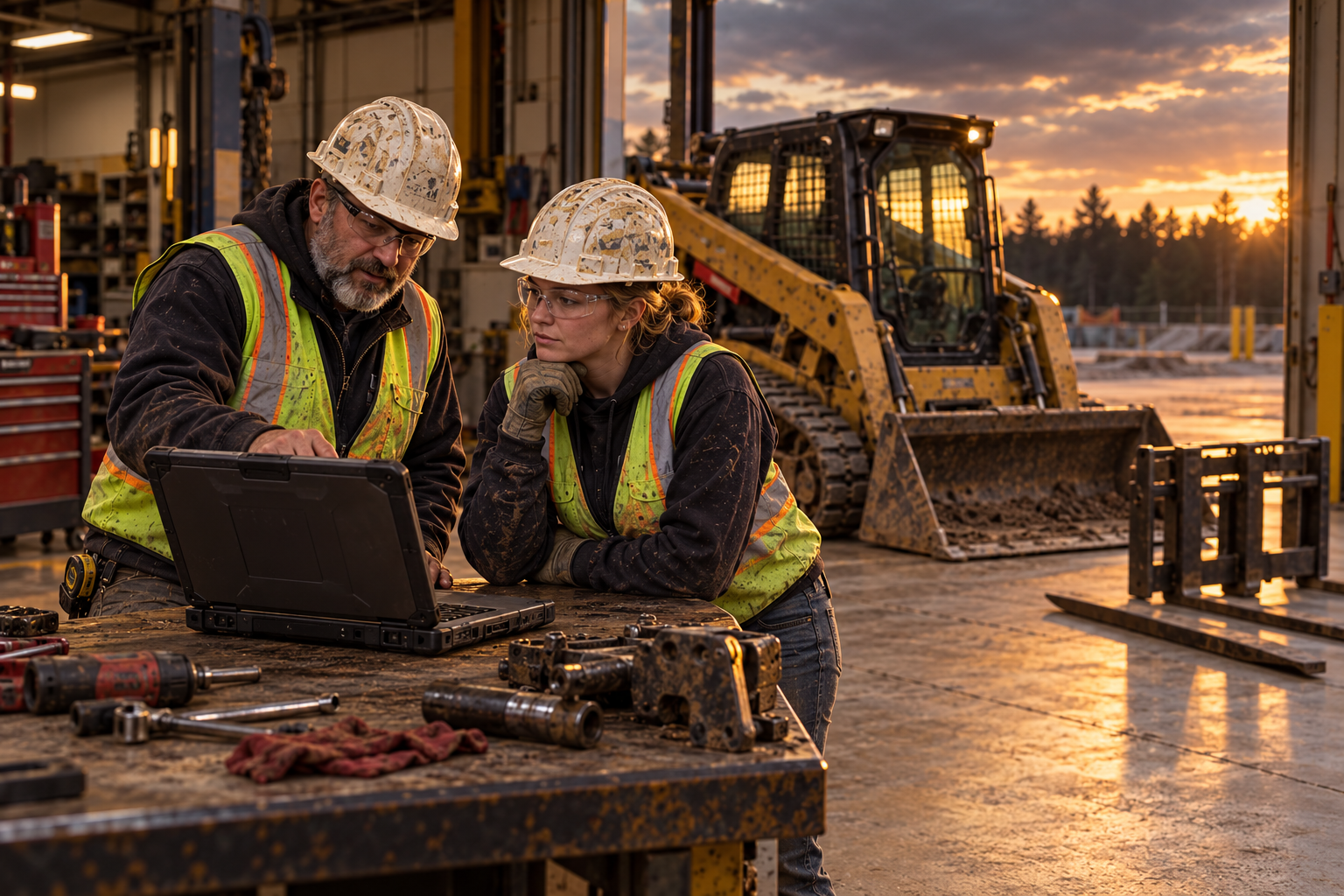
Professional operators are responsible for more than the controls. Students inspect assigned machines before operation and learn to identify conditions that could affect safety, production or equipment reliability.
Students are not being trained as diesel mechanics. They are taught practical inspection, troubleshooting and basic maintenance skills a responsible operator should understand.
Opportunity Meets Effort
HEO Academy provides the equipment, instruction and opportunity. Students train on both front-end loaders and skid steers, building experience across two machines with different controls, capabilities and applications.
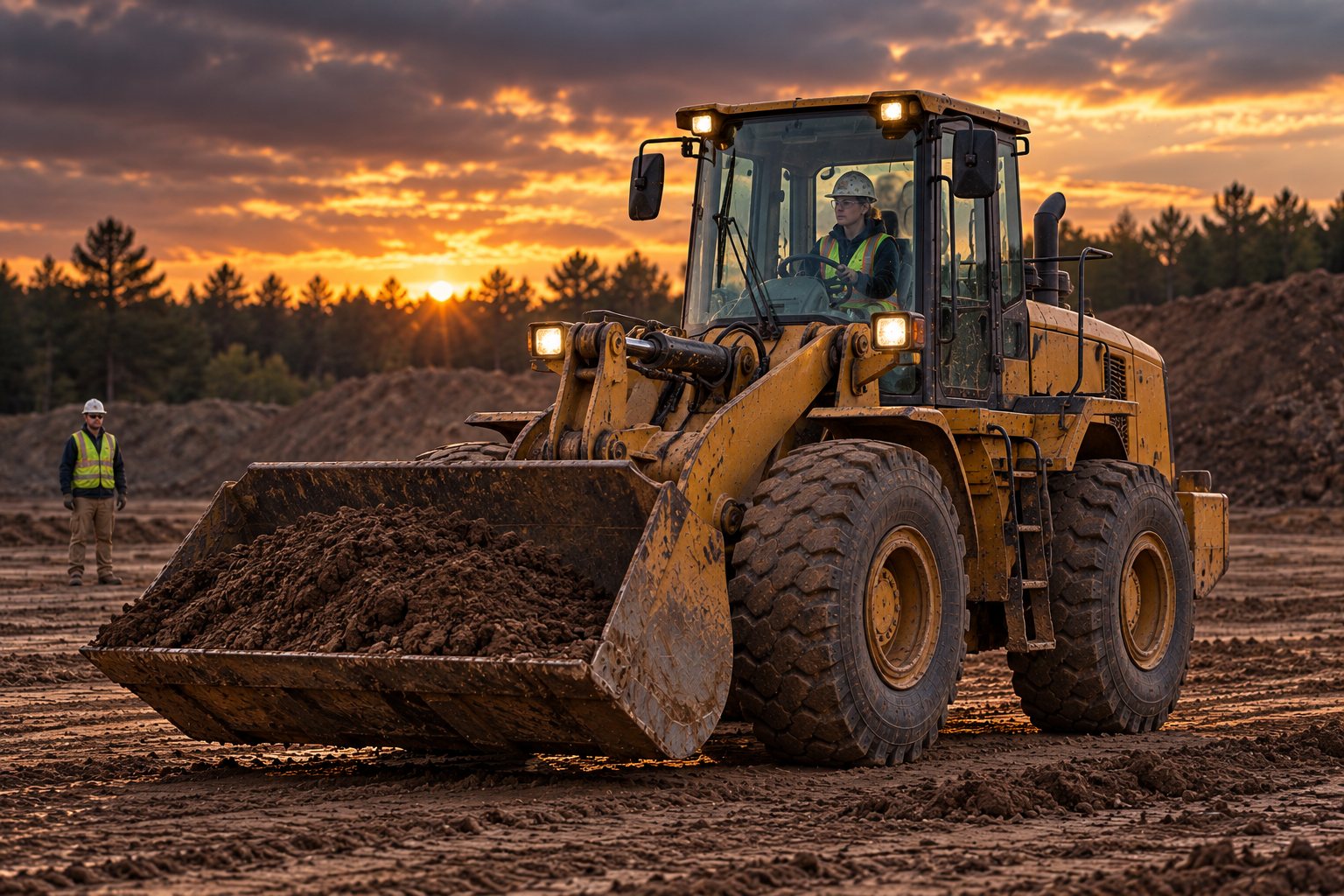
Additional Practice Time
When equipment and the academy schedule permit, students may arrive early, stay late or practice during approved off-hours. That additional time gives students another opportunity to build confidence and repetition on loaders and skid steers. For safety, at least two students must be present—no student may operate alone.
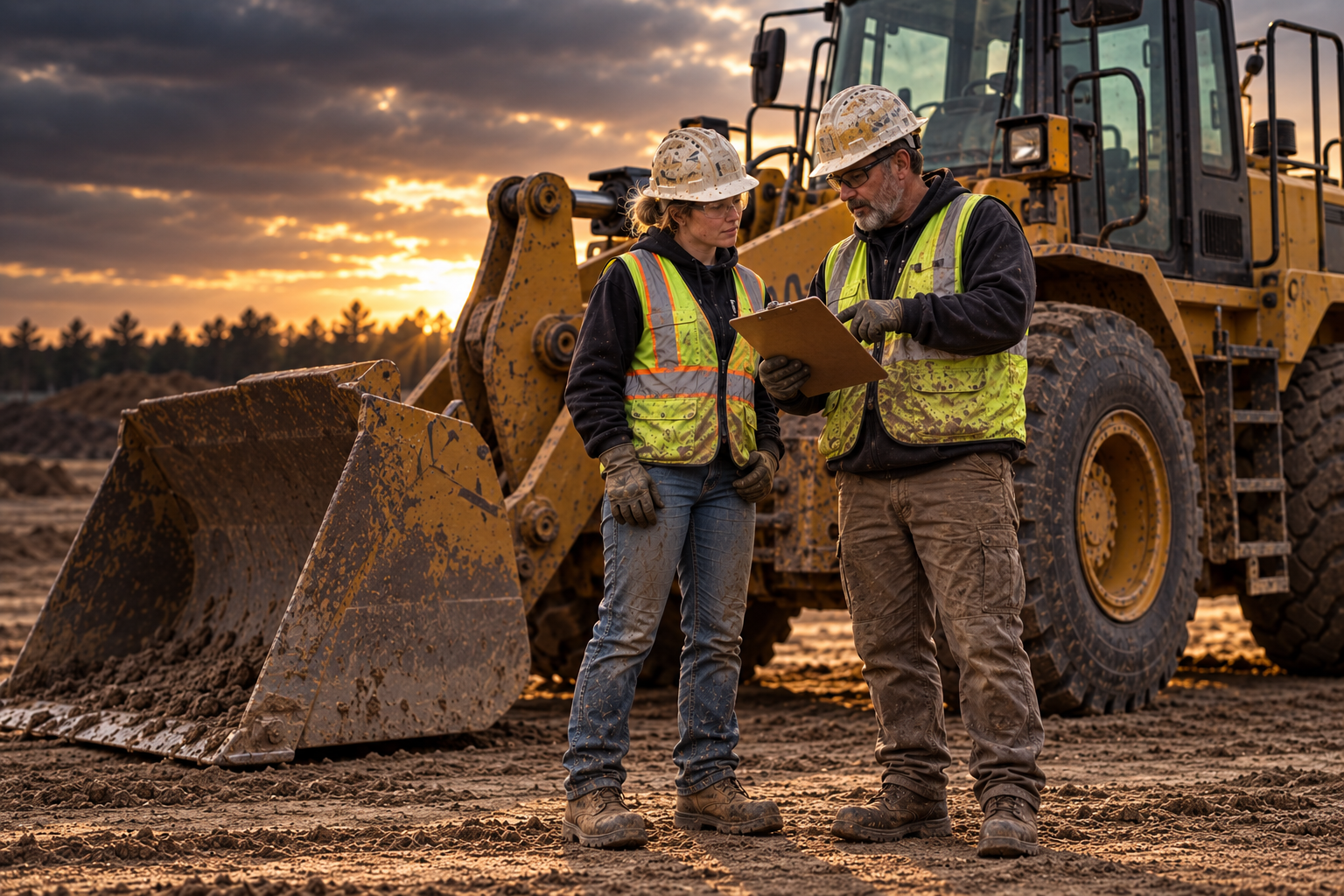
Employer-Focused Preparation
Employers need operators who can do more than move a machine. Attendance, work ethic, safety habits, initiative, equipment care and performance all contribute to the reputation a student builds. We encourage students to give us strong reasons to recommend them to contractors.
Graduate Skill Refreshers
Graduates may contact the academy when they need to refresh a skill, prepare for a new equipment assignment, ask technical questions or reconnect with available employment resources. That includes graduates moving between loaders, skid steers and different attachments as their responsibilities grow.
Graduation isn't the end of the relationship. HEO Academy graduates can reconnect with the school for technical questions, skill refreshers and available employment resources as they take on new equipment, attachments and responsibilities throughout their careers.
Loader & Skid Steer Training FAQ
From training hours and certification to attachments, material handling, equipment and what to expect in the seat, here are answers to the questions students ask most about our Loader & Skid Steer Operator Training Program.
No. This program is designed for students with little or no previous operating experience, as well as current operators who want to improve their machine control, material-handling and production skills.
Students begin with equipment inspections, controls, machine positioning and safe operating practices before progressing into loading, carrying, grading, attachment work and other practical assignments.
The Loader & Skid Steer Operator Training Program is approximately 80 hours completed over two weeks.
About 20 hours are dedicated to classroom instruction covering safety, equipment fundamentals and subjects directly related to loader and skid steer operation. The remaining approximately 60 hours are focused on hands-on training with real equipment.
Training is performance based, so students continue developing their skills throughout the course rather than simply completing a set of classroom requirements.
Students are evaluated separately on the front-end loader and skid steer and can earn certification on both machines by successfully demonstrating the required operating skills.
Certification is performance based. Students must demonstrate safe, accurate and productive operation rather than simply completing the scheduled class.
Students train on a John Deere 344 front-end loader and John Deere 331 skid steer, giving them experience with two machines that have very different operating characteristics and jobsite applications.
The front-end loader emphasizes loading, carrying, stockpile work and production material handling, while the skid steer adds tight-area maneuvering, grading, clearing and attachment work.
Training may include standard buckets, forks, a grapple bucket, dozer blade, tree puller and bush hog attachments.
Students learn how attachment choice changes machine handling, visibility, weight distribution and the type of work the machine can perform. Training also includes changing and connecting attachments when applicable.
Yes. Students learn how added weight and load position affect a machine's center of gravity, stability, steering and stopping characteristics.
Training covers rated operating capacity, load charts, stability principles, travel height, attachment weight, uneven terrain and proper load positioning so students understand how to keep the machine stable while carrying and handling material.
Classroom instruction focuses on the knowledge students need to safely and effectively operate front-end loaders and skid steers.
Topics include jobsite and equipment safety, pre-operation inspections, machine controls, load capacity and stability, center of gravity, safe material handling, attachment selection and use, basic equipment maintenance and operating practices for different ground and jobsite conditions.
The classroom portion is designed to support the hands-on training students receive in the field, so instruction stays focused on subjects directly applicable to loader and skid steer operation.
Yes. HEO Academy trains students from Arkansas and throughout the United States.
Affordable furnished student housing is available near the academy, subject to availability. Students should speak with admissions early if housing will be needed.
No school can guarantee employment. HEO Academy provides resume assistance, job leads, employer connections and continued career support, but hiring decisions are made by individual employers.
Attendance, safety habits, work ethic, initiative and demonstrated operating ability all affect the recommendation a student earns.
Simulators may introduce basic controls, but they cannot reproduce the weight, resistance, traction, visibility and changing ground conditions an operator experiences on real equipment.
Loader and skid steer operators must learn how a machine responds with material in the bucket, how added weight affects stability, how attachments change machine behavior and how to work safely around people, utilities and other equipment.
Employers need operators with real seat time, so HEO Academy trains students on actual equipment rather than relying on simulation.
We're here to help. Give us a call or send us a message.
Ready to Start Training?
Train on real equipment. Talk with admissions about your next class, tuition, funding, and student housing.