BLADE CONTROL
Rough & Finish Grading
Learn to control the blade through consistent passes, establish grade and improve surface accuracy from rough work through finish grading.

Train on multiple full-size bulldozers and build practical skills in rough grading, finish grading, earthmoving, site preparation and safe production. Students learn on real equipment—not simulators.
PRECISION GRADING & EARTHMOVING
Build the practical operating skills used in grading, earthmoving and site preparation through hands-on training on real bulldozers. Students learn machine control, production techniques and the jobsite knowledge behind accurate, efficient work.
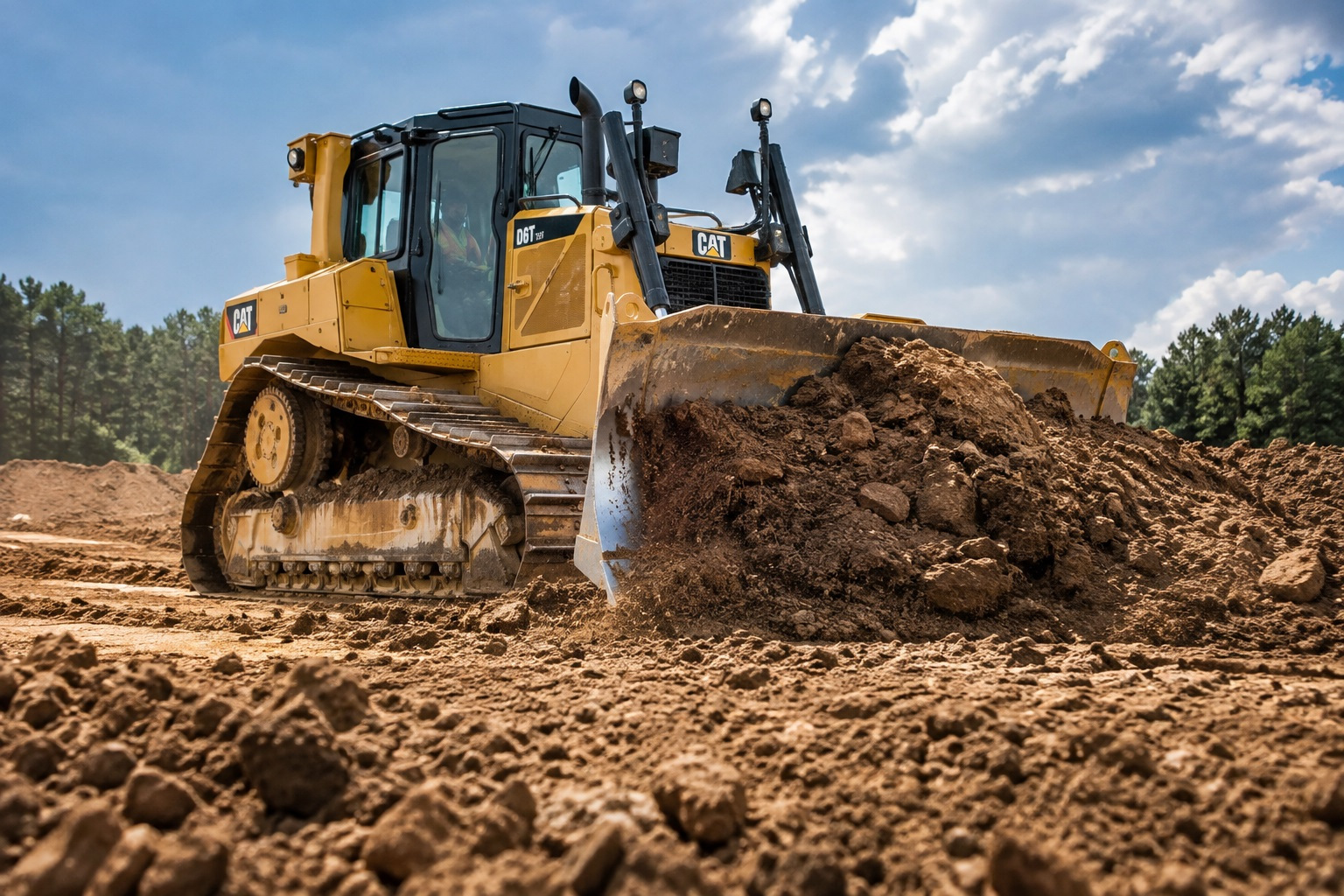
Students spend the majority of the program operating full-size bulldozers in field conditions—not simulators.
BUILT FOR THE JOBSITE
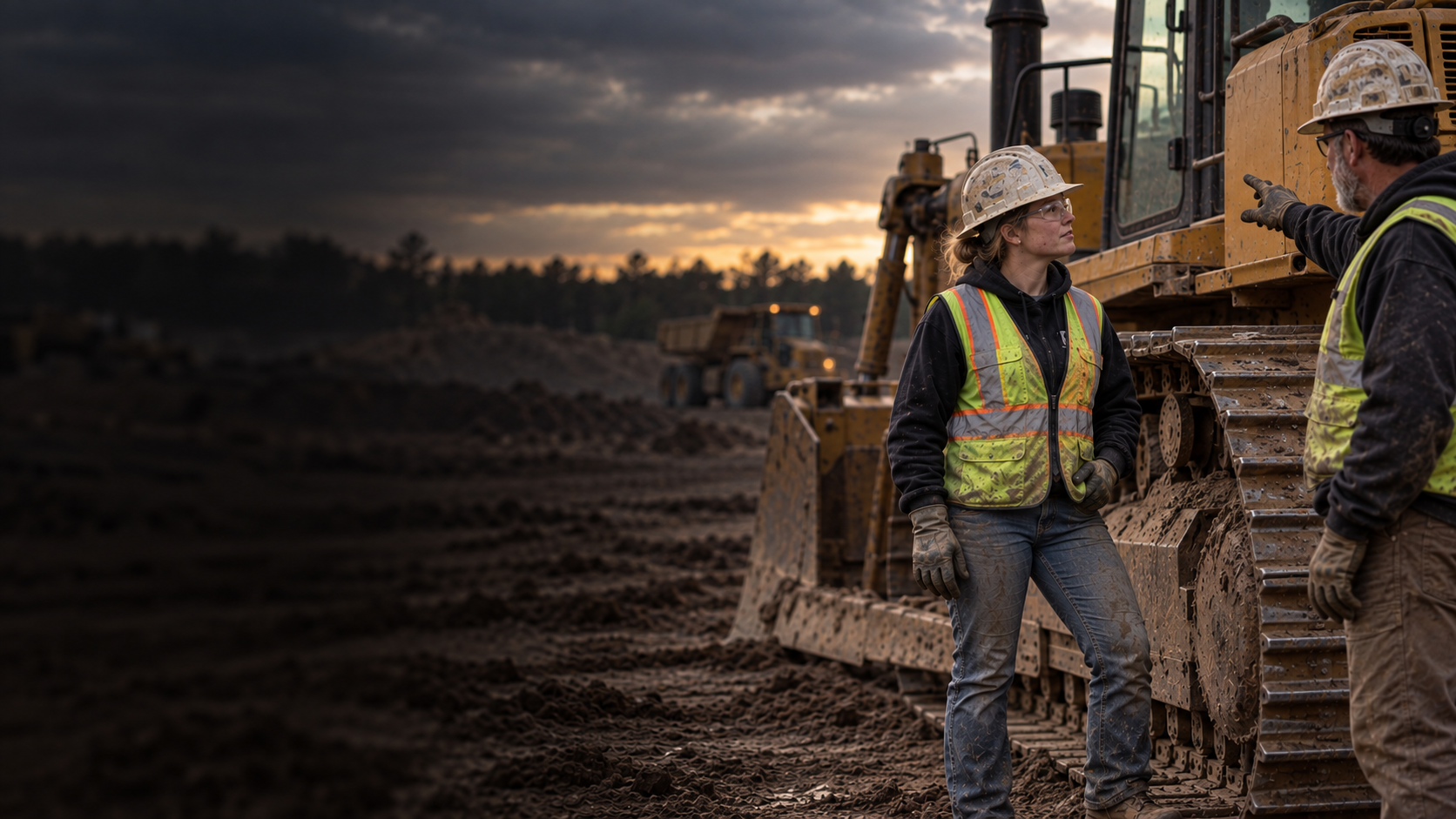
A skilled bulldozer operator does more than move dirt. Training develops the control, judgment and jobsite awareness needed to understand how terrain, material, blade position and grade affect the finished work.
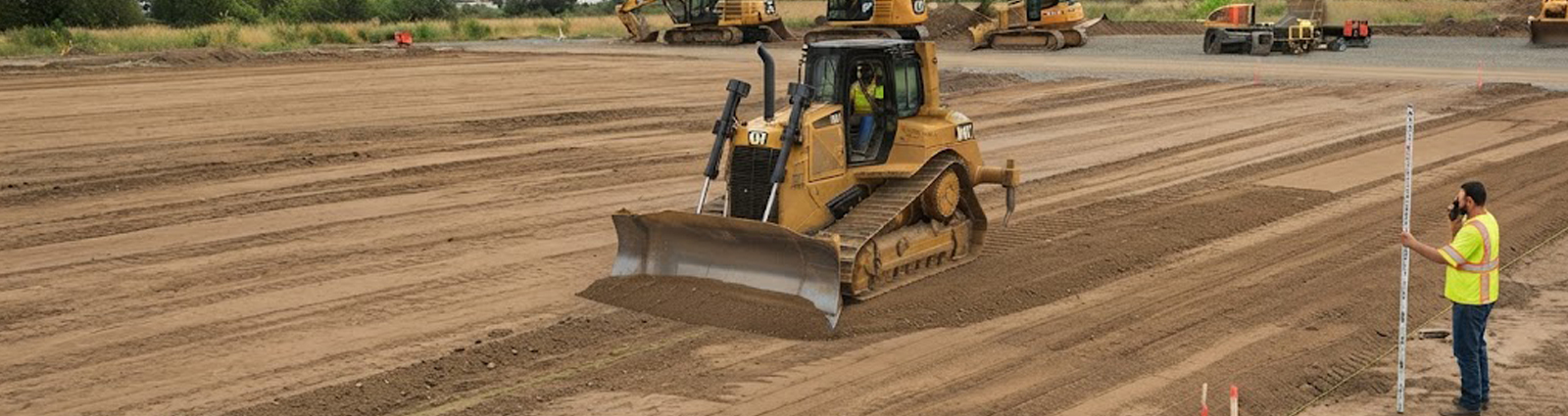
Learn to control the blade through consistent passes, establish grade and improve surface accuracy from rough work through finish grading.

Understand material placement, lift thickness, cut-and-fill work and the techniques used to prepare pads and working surfaces.

Learn to work from grade information and use grade stakes, a transit laser and grade rod to check elevations and finished surfaces.

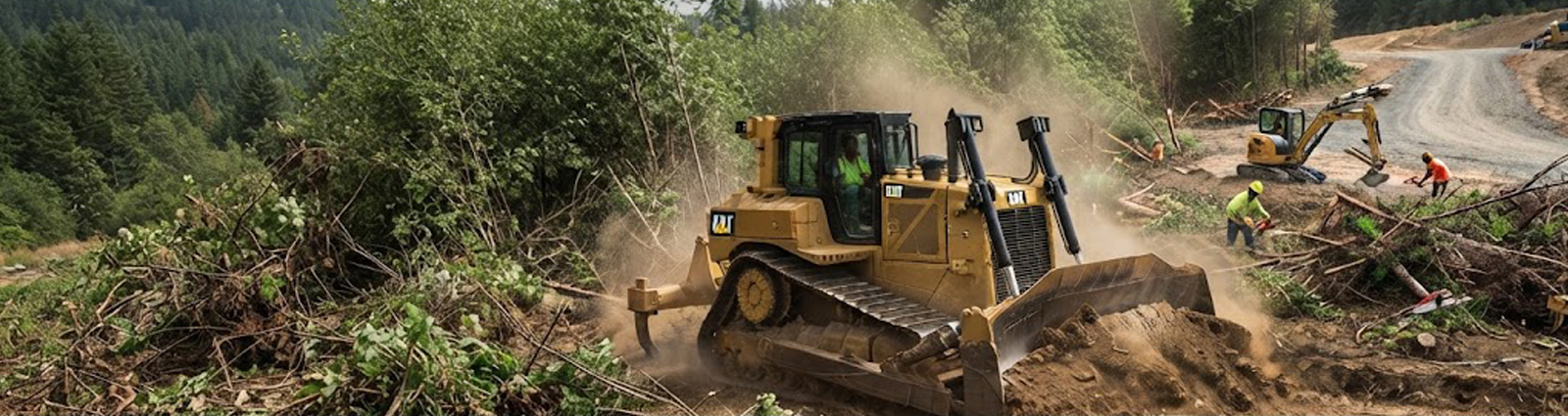
Practice pushing material, clearing land, working stockpiles and positioning the machine for productive earthmoving assignments.
Develop the pre-operation inspection, machine-awareness and safe operating habits expected before a bulldozer goes to work.

Learn to think through the work, communicate around an active jobsite and approach assignments with a production-operator mindset.
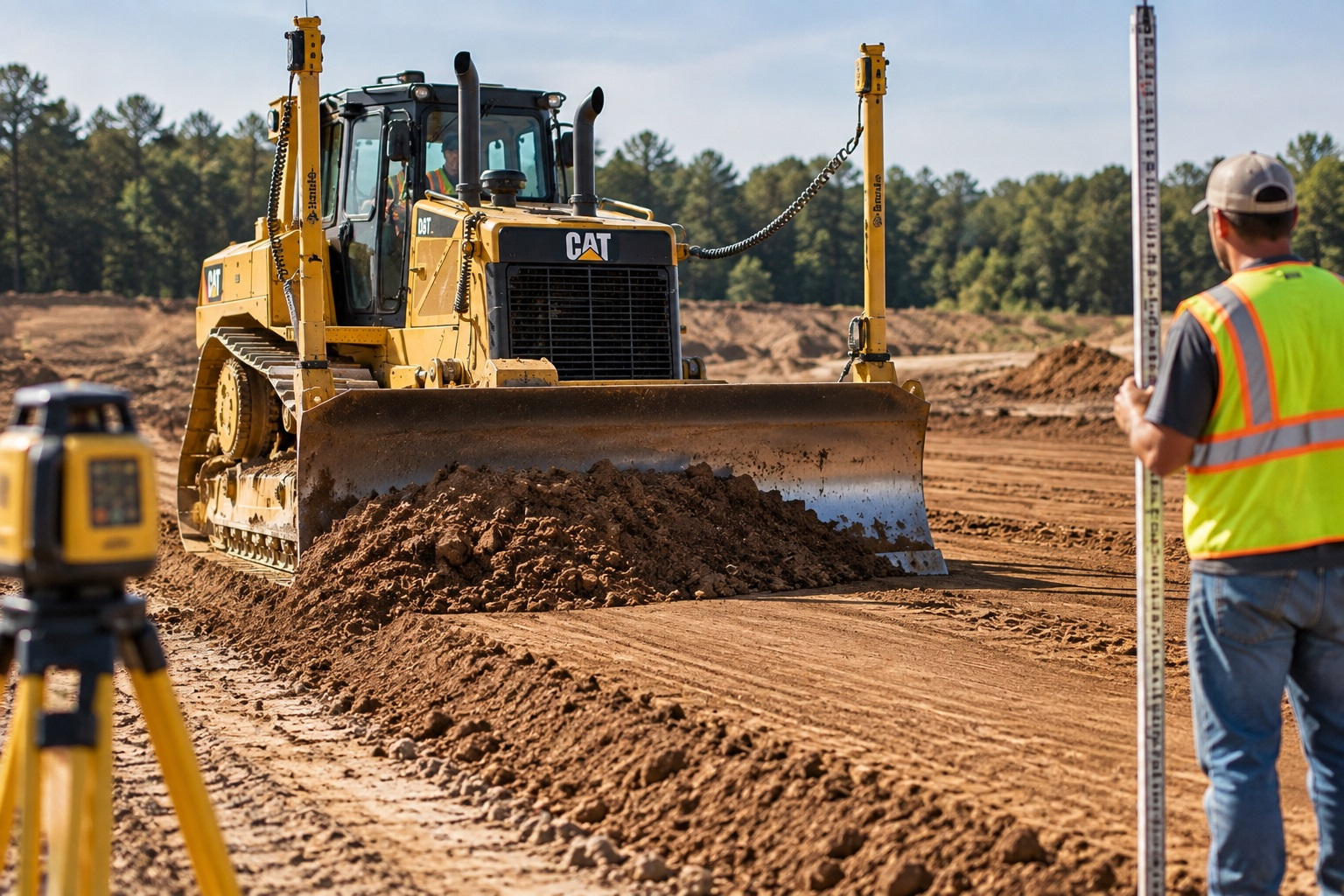
Bulldozer training goes beyond learning the controls. Students learn how grade information translates into blade movement and how operators check their work for accuracy as the job progresses.
Real Equipment. Different Applications.
Bulldozers do not all handle the same way or serve the same purpose. Students work with multiple machines so they can experience different controls, power levels, operating characteristics and jobsite uses.

Students develop foundational blade control, grading and earthmoving skills on a cabbed dozer used across a variety of practical training assignments.

This machine introduces students to automatic grade-control features after they have demonstrated the ability to establish and maintain grade manually.

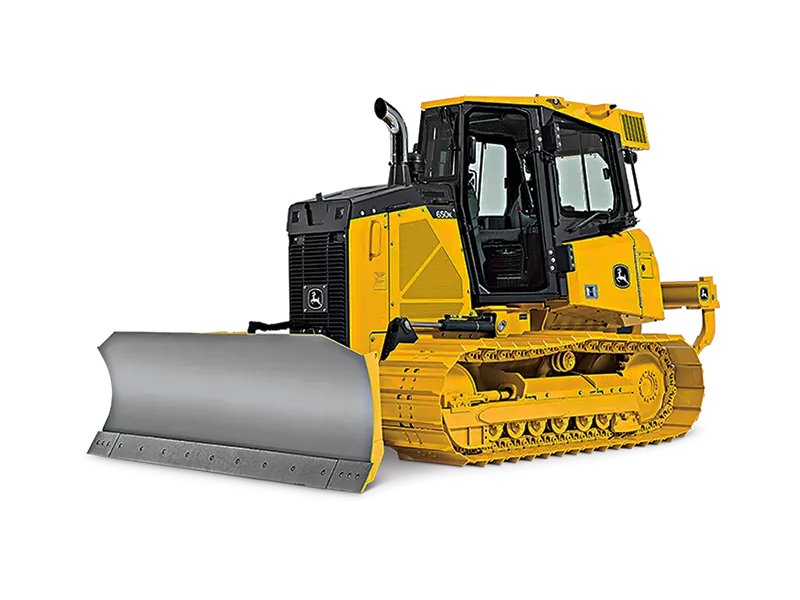
The larger 650K includes rear rippers used to break difficult or compacted ground before grading, pushing and site preparation.

The open-cab Caterpillar D5 is used for practical land-clearing work and provides a different operating environment from the academy’s enclosed-cab machines.
Fundamentals First
Modern grade-control technology can improve speed and accuracy, but technology should support a skilled operator—not replace fundamental operating knowledge.
Students first learn to establish and maintain grade manually. They must understand how the machine, blade, material and terrain work together before being introduced to automatic controls.
Students also receive a demonstration of GPS grade-control technology used on modern jobsites, helping them understand both traditional methods and advanced systems they may encounter in the workforce.
Certification Earned in the Dirt
Students do not earn bulldozer certification by memorizing answers for a written test. They must repeatedly demonstrate safe, accurate and efficient operation on real equipment. Evaluation begins on day one and continues as each student’s skills improve.

Pre-operation inspection, start-up, seatbelt use, safe backing, travel speed, surroundings, hand signals and proper shutdown.
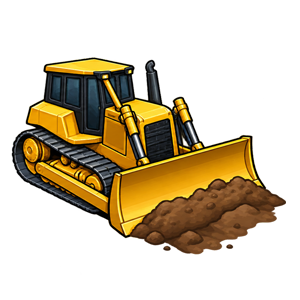
Smooth blade control, matching and holding grade, laser grading, consistent passes, rough grading, finish quality and slope work.

Slot dozing, moving spoil, cutting ditches, clearing land, backfilling, building ramps and stockpiles, planning work and improving efficiency.
The goal is to help students work toward approximately 80% of an experienced professional operator’s production level while maintaining safety and acceptable work quality. Students receive repeated opportunities to improve speed, accuracy and decision-making.

Skills Recognized Honestly
HEO Academy recognizes two levels of bulldozer skill. Students are certified according to the ability they successfully demonstrate—not simply because they completed the scheduled class.
Certification Level One
Rough grading emphasizes safe, productive material movement and initial site work where exact final elevation and surface smoothness are not yet required.
Advanced Certification Level
Finish operators must demonstrate the finer control, consistency and judgment required to produce a smooth, accurate finished surface.
Think Like an Operator
Professional operators are responsible for more than the controls. Students inspect assigned machines before operation and learn to identify conditions that could affect safety, production or equipment reliability.
Students are not being trained as diesel mechanics. They are taught practical inspection, troubleshooting and basic maintenance skills a responsible operator should understand.

Construction Permits &
Project Requirements

Grade Stakes &
Survey Markers

OSHA & MSHA
Safety Requirements

Environmental & EPA
Considerations
Built for Long-Term Career Growth
HEO Academy prepares operators to understand the larger construction project—not only the bulldozer assigned to them.
Technical classroom subjects give attentive students a foundation they can use later while pursuing opportunities such as lead operator, foreman, superintendent or business owner.

Blueprints, Site Plans &
Civil Drawings

Utility Locate Requests
& Markings

MUTCD Work-Zone
Procedures

Jobsite Planning &
Crew Communication
Opportunity Meets Effort
HEO Academy provides the equipment, instruction and opportunity. What students do with it depends on the effort, attendance and initiative they bring to the work.
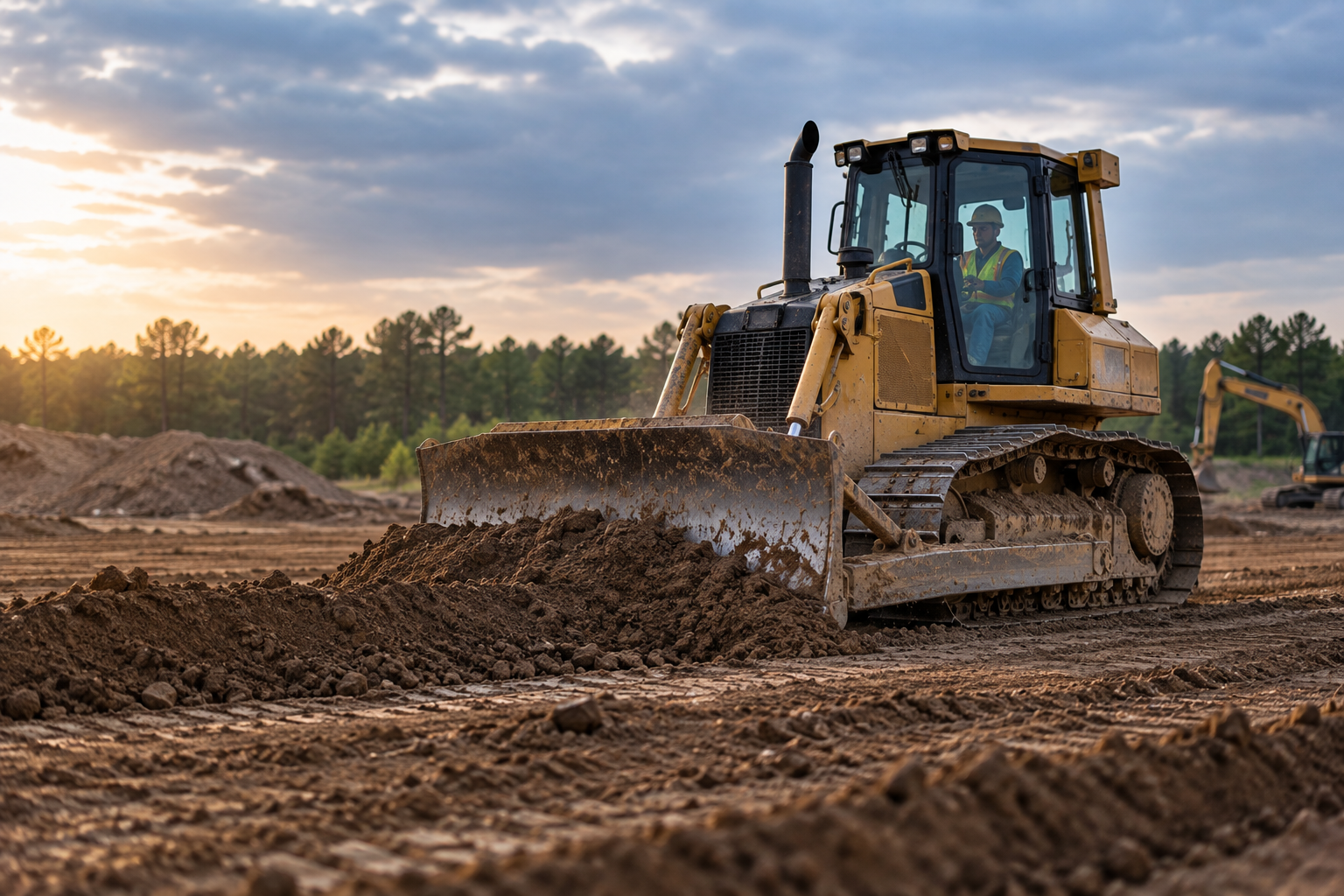
Additional Practice Time
When equipment and the academy schedule permit, students may arrive early, stay late or practice during approved off-hours. For safety, at least two students must be present—no student may operate alone.
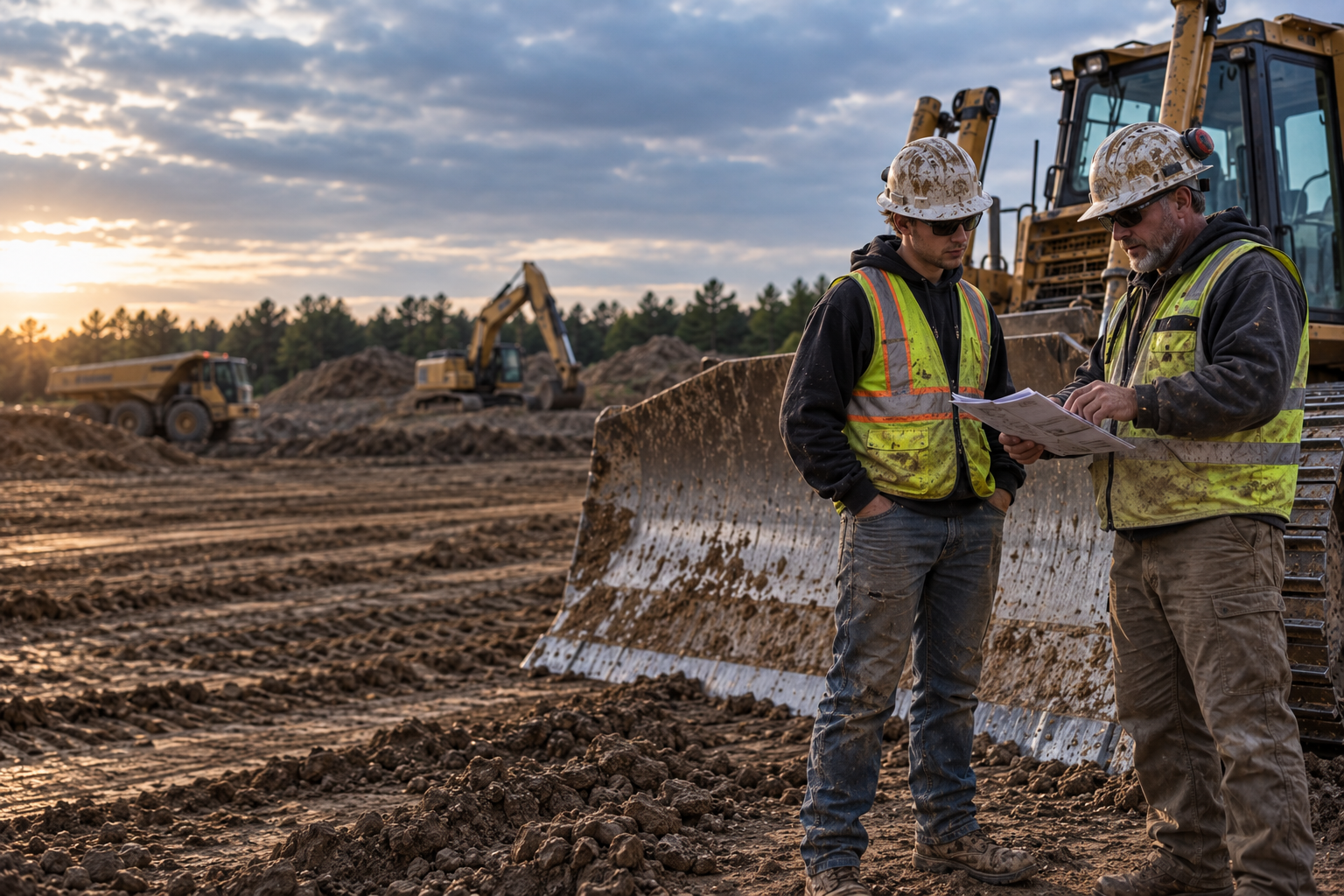
Employer-Focused Preparation
Attendance, work ethic, safety habits, initiative and performance contribute to the reputation a student builds. We encourage students to give us strong reasons to recommend them to contractors.
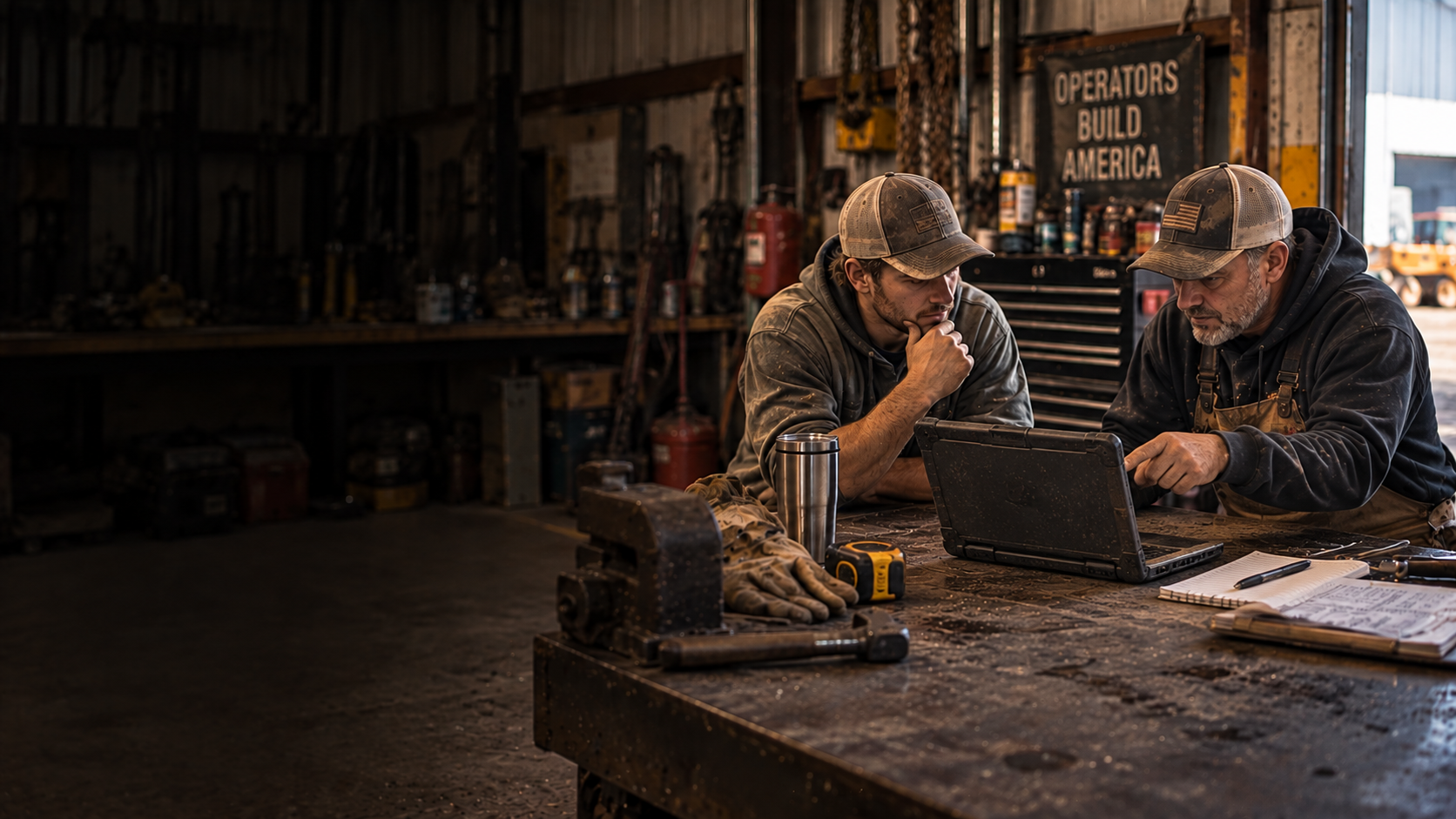
Graduate Skill Refreshers
Graduates may contact the academy when they need to refresh a skill, prepare for a new equipment assignment, ask technical questions or reconnect with available employment resources.
Graduation isn't the end of the relationship. HEO Academy graduates can reconnect with the school for technical questions, skill refreshers and available employment resources as their careers continue.
Bulldozer Training FAQ
From training hours and certification to grading, equipment and what to expect in the seat, here are answers to the questions students ask most about our Bulldozer Operator Training Program.
No. This program is designed for students with little or no previous operating experience, as well as current operators who want to improve their grading, production and blade-control skills.
Students begin with equipment inspections, controls, machine positioning and safe operating practices before progressing into more advanced assignments.
The bulldozer program is three weeks long and includes approximately 120 hours of training.
More than 80 hours are devoted to hands-on equipment training, with approximately 40 hours covering safety, blueprints, grade information, site planning and other technical subjects.
Rough dozer certification focuses on safe, productive material movement, land clearing, stockpile work and initial site preparation where an exact finished surface is not yet required.
Finish dozer certification requires finer blade control, consistent grade, smooth transitions and the ability to create accurate finished surfaces for roads, driveways, building pads and similar projects.
Students are certified according to the level of operating skill they successfully demonstrate.
Yes. Students may train on multiple full-size bulldozers, including John Deere 450K, John Deere 450P, John Deere 650K and Caterpillar D5 machines.
This provides experience with different machine sizes, power levels, operating characteristics, cab configurations, rear rippers, six-way blades and grade-control features.
Students are introduced to automatic and GPS grade-control technology, but they first learn to establish and maintain grade manually.
Manual training includes reading grade stakes, communicating with a spotter or grade checker, using a transit laser and grade rod, controlling blade lift, angle and tilt, and checking the finished surface for accuracy.
Learning the fundamentals first helps operators remain productive when automated systems are unavailable.
HEO Academy certification is performance based. Students do not earn certification simply by attending the scheduled class or passing a written test.
Practical evaluation begins on the first day and continues as each student demonstrates safer, more accurate and more efficient operation on real equipment.
Training includes equipment inspections, safe operating procedures, OSHA-10, MSHA, construction blueprints, civil drawings, grade stakes, survey markers, utility locate requests, MUTCD work-zone procedures and jobsite communication.
Students are also introduced to the inspection and basic field-maintenance responsibilities expected of professional equipment operators.
Yes. HEO Academy trains students from Arkansas and throughout the United States.
Affordable furnished student housing is available near the academy, subject to availability. Students should speak with admissions early if housing will be needed.
No school can guarantee employment. HEO Academy provides resume assistance, job leads, employer connections and continued career support, but hiring decisions are made by individual employers.
Attendance, safety habits, work ethic, initiative and demonstrated operating ability all affect the recommendation a student earns.
Simulators may help introduce basic controls, but they do not reproduce the weight, resistance, traction, vibration, visibility and changing ground conditions an operator experiences on a real jobsite.
Operating a bulldozer requires more than moving joysticks. Students must learn how the blade loads, how material moves, how the machine reacts on slopes and soft ground, and how to work safely around people, utilities and other equipment.
A driving simulator does not make someone a race-car driver, and a flight simulator alone does not prepare someone to carry passengers in a real aircraft. Heavy equipment is no different. Employers need operators with real seat time, so HEO Academy trains students on actual bulldozers rather than relying on video-game-style simulation.
We're here to help. Give us a call or send us a message.
Ready to Start Training?
Train on real equipment. Talk with admissions about your next class, tuition, funding, and student housing.